


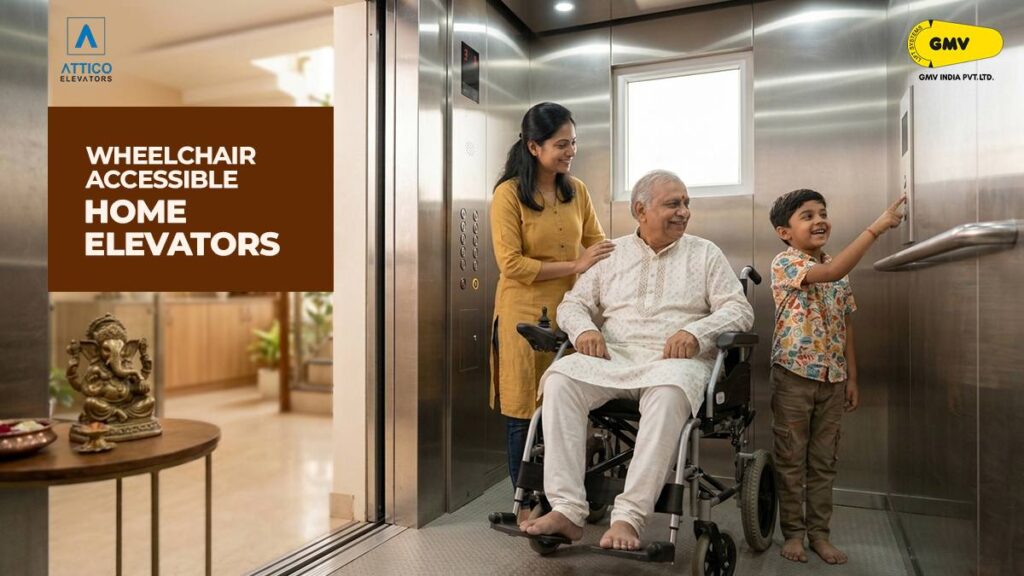
Finding the right wheelchair accessible home elevators requires understanding specific features, dimensions, and compliance standards that ensure true accessibility. This comprehensive guide covers everything from essential specifications to optional features, helping you make an informed decision for your Delhi home.
1. Essential Dimensional Requirements
The foundation of wheelchair accessibility is adequate space. Here are the minimum dimensions required for true accessibility:
Cabin Interior Dimensions
- Minimum Width: 1200mm (4 feet) – Allows wheelchair to enter and turn
- Minimum Depth: 1400mm (4.6 feet) – Provides turning space inside cabin
- Recommended for Comfort: 1350mm × 1500mm – Better maneuverability for power wheelchairs
- Height: 2100mm minimum – Accommodates standing companions
Door Opening Specifications
- Clear Opening Width: 900mm minimum (36 inches) – Standard wheelchairs are 600-700mm wide
- Recommended: 950-1000mm – Better for power wheelchairs and scooters
- Door Height: 2000mm standard
Landing Space Requirements
- Clear Floor Space: 1500mm × 1500mm on each floor – Required for 180-degree wheelchair turning
- Approach Space: Minimum 1200mm straight approach to elevator door of Platform Wheelchair Lifts.
Wheelchair Types & Space Requirements
| Wheelchair Type | Width | Length | Recommended Cabin |
|---|---|---|---|
| Manual Wheelchair | 600-650mm | 1000-1100mm | 1200 × 1400mm |
| Power Wheelchair | 650-750mm | 1100-1300mm | 1350 × 1500mm |
| Mobility Scooter | 700-800mm | 1200-1400mm | 1400 × 1600mm |
2. Must-Have Accessibility Features
Beyond dimensions, specific features ensure genuine accessibility. These are non-negotiable for wheelchair users:
A. Automatic Door System
- Type: Automatic sliding doors (manual doors are NOT accessible)
- Opening Speed: Slow, controlled (2-3 seconds)
- Door Hold Time: 8-10 seconds minimum (standard is 3-5 seconds)
- Safety Sensors: Infrared beams + pressure-sensitive edges prevent closing on wheelchair
- Reopening Function: Doors automatically reverse if obstruction detected
B. Low-Threshold Entry
- Maximum Gap: 13mm (1/2 inch) between cabin floor and landing – International accessibility standard
- Ideal: Flush entry (0mm gap) – Best for smooth wheelchair entry
- Leveling Accuracy: ±10mm vertical alignment tolerance
C. Control Panel Design
Height & Placement:
- Panel Center Height: 900-1200mm from floor (reachable from seated position)
- Highest Button: Maximum 1200mm from floor
- Distance from Corner: Minimum 400mm – Allows wheelchair to approach at angle
Button Specifications:
- Size: Minimum 20mm diameter (larger is better – 25-30mm ideal)
- Type: Raised or flush with tactile surface (not recessed)
- Spacing: Minimum 40mm between button centers
- Force Required: Maximum 5 pounds pressure – Easy to press with limited hand strength
- Visual Feedback: LED indicator confirms button press
Accessibility Markings:
- Braille: Next to each button (not on the button itself)
- Tactile Numbers: Raised floor numbers for visually impaired users
- High Contrast: Dark buttons on light background or vice versa
Find This: Customization Options for Home Elevators
3. Critical Safety Features
Emergency Communication System
- Two-Way Intercom: Hands-free communication with monitoring station or family member
- Emergency Button Height: 850-1000mm from floor (lower than regular buttons)
- Battery Backup: System works during power outage
- Auto-Dial Option: Can automatically call preprogrammed numbers
Grab Rails & Support
- Height: 800-900mm from floor (waist height when standing)
- Placement: On side and rear walls (not behind wheelchair position)
- Diameter: 35-40mm – Easy to grip for users with limited hand mobility
- Material: Non-slip coating, warm to touch (not cold metal)
Emergency Power Backup (ARD)
- Function: Automatically lowers elevator to nearest floor during power cut
- Battery Capacity: Minimum 2-3 rescue cycles per charge
- Essential for: Delhi homes experiencing frequent power cuts
4. Advanced Accessibility Features
A. Mirror Placement
- Location: Full-height mirror on rear wall opposite door
- Purpose: Allows wheelchair users to see behind when backing out
- Size: Minimum 900mm wide × 1800mm high
B. Voice Announcement System
- Floor Announcements: Audible announcement of each floor (English + Hindi option)
- Direction Indication: “Going up” or “Going down” announcements
- Volume Control: Adjustable volume (important for hearing-impaired users)
C. Visual Indicators
- Floor Display: Large LED display showing current floor (minimum 50mm height numbers)
- Direction Arrows: Illuminated up/down arrows
- Door Status Lights: Indicates when doors are opening/closing/locked
D. Non-Slip Flooring
Material Options:
- Textured Rubber: Best traction, wheelchair-friendly (recommended)
- Anti-Slip Vinyl: Good traction, easy to clean
- Checkered Steel Plate: Durable but can be slippery when wet (not ideal)
- Coefficient of Friction: Minimum 0.6 (wet or dry) – Prevents wheelchair slippage during movement
5. Control System Options
Standard Control Methods
- Push Buttons (Essential): Large, tactile buttons with Braille
- Constant Pressure Buttons: User must hold button until door closes (safety feature for confused users)
- Key Switch (Optional): Restricts access to specific users or floors
Advanced Control Options
1. Smartphone App Control:
- Call elevator remotely before approaching
- Check elevator position and status
- Grant access to caregivers remotely
2. Voice Control (Emerging Technology):
- “Alexa, send elevator to ground floor”
- Hands-free operation (ideal for severe mobility limitations)
- Integration with smart home systems
3. RFID Card/Fob Access:
- Wave card near reader to call elevator
- Good for users with limited fine motor control
6. Installation Requirements for Delhi Homes
Most Delhi homes werent originally designed with elevators in mind. However, creative solutions exist:
- Stairwell conversion: Many families convert existing staircases, maintaining stairs on one side and installing a compact elevator on the other
- External shaft addition: Glass elevators attached to building exterior (common in South Delhi renovations)
- Balcony conversion: Small balconies on each floor can be enclosed to create elevator shaft space
Space Allocation Options
1. New Shaft Construction (Ideal):
- Requires: 1600mm × 1800mm shaft space (includes walls)
- Best for: New construction or major renovations
2. Stairwell Conversion:
- Partially converts existing staircase
- Maintains stairs on one side, elevator on other
3. External Glass Shaft:
- Attached to building exterior
- Common in South Delhi heritage home renovations
Timeline: From consultation to commissioning, expect 6-8 weeks for new installations, 8-12 weeks for retrofit projects requiring structural modifications.
7. Cost Breakdown of Home Lifts in Delhi NCR
Basic Wheelchair-Accessible Elevator (3 Floors):
- Equipment + Installation: ₹10-12 lakhs
- Includes: Standard automatic doors, basic controls, ARD, grab rails
- Timeline: 6-8 weeks
Premium Accessible Elevator:
- Equipment + Installation: ₹16-20 lakhs
- Includes: Voice announcements, smartphone control, premium finishes, larger cabin
- Timeline: 8-10 weeks
Ongoing Costs:
- AMC (Annual Maintenance Contract): ₹30,000-40,000/year
- Electricity: ₹400-600/month (typical residential usage)
8. Compliance & Standards
International Standards:
- ADA (Americans with Disabilities Act): U.S. accessibility standard – Global benchmark
- EN 81-70: European standard for accessible elevators
- IS 14665: Indian standard for lifts and elevators
Delhi-Specific Requirements:
- MCD (Municipal Corporation of Delhi) approval required
- Building bye-laws compliance certificate
- Annual safety inspection mandatory
Key Takeaways: Your Checklist
When evaluating wheelchair-accessible home elevators, ensure these essential features are included:
✓ Minimum 1200mm × 1400mm cabin size
✓ 900mm minimum door opening
✓ Automatic sliding doors with 8-10 second hold time
✓ Low-threshold entry (maximum 13mm gap)
✓ Control panel at 900-1200mm height with Braille
✓ Emergency communication system
✓ Grab rails on side and rear walls
✓ Battery backup (ARD) for power cuts
✓ Non-slip flooring
✓ IS 14665 compliance certification
Real World Applications of Platform Wheelchair Lift
The Challenge: When 68-year-old Mrs. Sharma from Greater Kailash, Delhi, suffered a spinal injury in 2023, her three-story family home became a prison. The stairs that once connected her to her grandchildrens playroom, her rooftop garden, and family gatherings became impossible barriers. I felt like a burden, she recalls. I couldn’t visit my daughters room on the second floor or join family dinners. I was trapped on the ground floor.
The Solution: Six months later, after installing a wheelchair-accessible home elevator, Mrs. Sharmas life transformed completely. She can access every part of my home again. She felt independent and got her dignity back. Her story represents millions of Indians with mobility challenges who deserve the freedom to navigate their own homes.
The Challenge: Recovering from spinal injuries, strokes, or accidents often requires extended home-based rehabilitation. Stairs become impossible obstacles during recovery.
The Solution: Rajesh Kumar, a 45-year-old software engineer from Dwarka, installed a wheelchair-accessible elevator after a motorcycle accident left him paraplegic. His three-bedroom villa spans three floors, with bedrooms on the second floor and a home office on the third.
Initially, my family suggested I move to a ground-floor apartment, Rajesh shares. But this is our home. We built it together. The elevator meant I didnt have to leave my home or compromise my independence.
Key Features That Made the Difference:
- Wide cabin doors (900mm): Allows easy wheelchair entry without tight maneuvering
- Low-threshold access: Flush floor entry eliminates the need to navigate bumps or lips
- Automatic sliding doors: No manual effort required doors stay open long enough for safe entry
- Emergency communication system: Two-way intercom connecting to ground floor for emergencies
Find Here: Key Features to look in a Luxury Home Elevator
Expert Consultation for Wheelchair-Accessible Elevators
Attico Elevators specializes in designing fully compliant wheelchair-accessible home elevators.
Our team includes accessibility consultants who work with families to create customized solutions for Residential Elevators in Delhi.
- Free home assessment: Our experts evaluate your space and provide accessibility recommendations
- Custom design: Tailored to your specific mobility needs and home architecture
- Full compliance: Meets or exceeds accessibility standards and MCD regulations. Ensure full ADA and IS 14665 compliance, handle MCD approvals and documentation.
- Financing options: Flexible payment plans available
Contact Information:
- Phone: +91 9990979607
- Email: support@atticoelevators.com
- Free Consultation: Schedule a home visit with our accessibility expert