


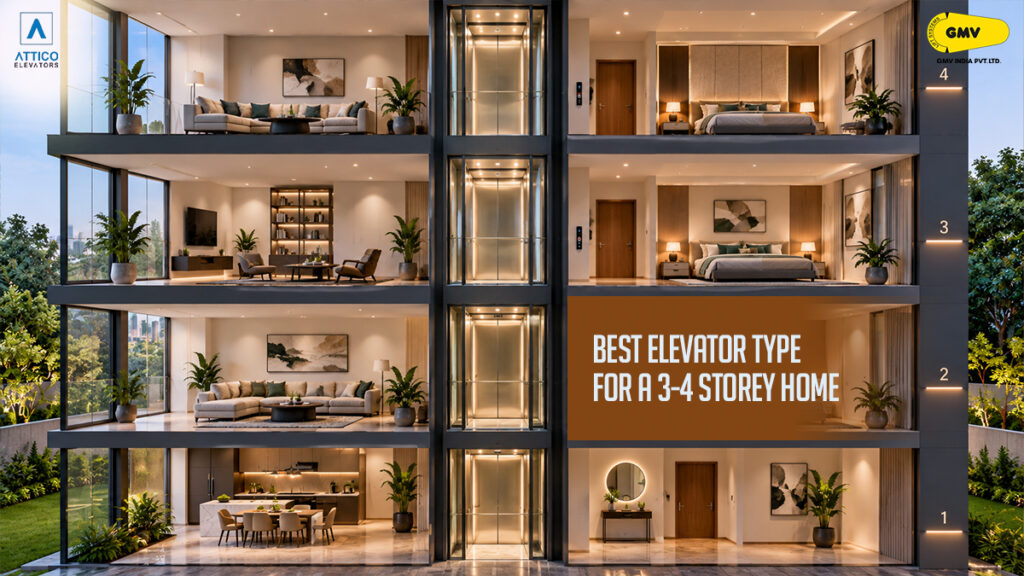
Choosing the right elevator for a 3-4 storey home isn’t just about adding convenience- it’s a decision that affects your construction budget, available space, and long-term running costs. With Delhi NCR’s independent houses, builder floors, and villas increasingly opting for home lifts, the question homeowners ask most often is: which elevator type actually makes sense for a house this size?
Here’s a detailed guide to help you decide.
Why do you Need an Elevator for a 3–4 Storey Home?
For many homeowners, a home elevator starts as a convenience and becomes a necessity over time. It’s especially worth considering if:
- You have elderly parents or family members with mobility challenges living with you
- You’re building for the long term and want your home to remain accessible as you age
- You frequently move heavy items (furniture, groceries, luggage) between floors
- You want to add resale value- home elevators are increasingly seen as a premium amenity in Delhi NCR’s real estate market
For a 3-4 storey home, a lift also saves meaningful time day-to-day, especially in larger floor plans common in Gurugram, Faridabad, and Noida villas.
Elevator Types to Consider for 3-4 storey houses
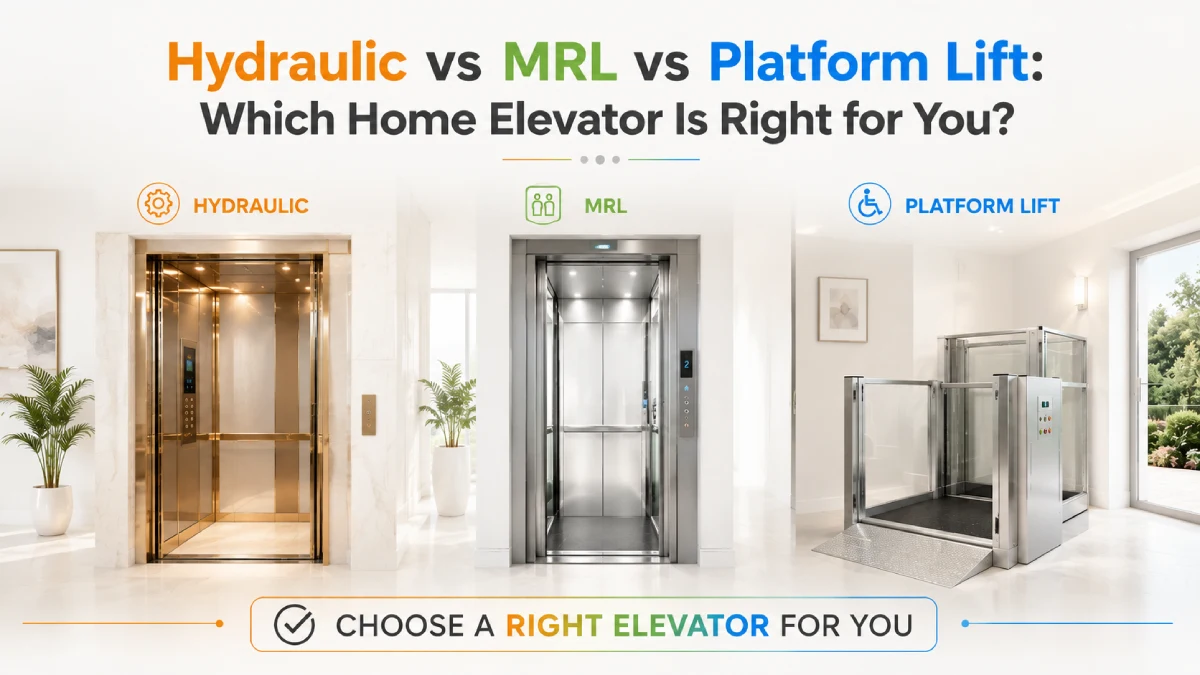
1. MRL (Machine Room Less) Elevator
An MRL elevator houses its motor and controller inside the shaft itself, rather than in a separate rooftop machine room. This makes it the most space-efficient option for homes where every square foot counts.
Best for: Homes with limited terrace or rooftop space, and anyone who wants a cleaner, more modern build without a dedicated machine room eating into usable area.
Why it works well for 3-4 floors: MRL elevators are rated for up to 10 floors and travel heights up to 45 meters-well within range for a Delhi NCR home, while running quieter and more energy-efficiently than older elevator types, thanks to their gearless traction motor.
2. Hydraulic Elevator
Hydraulic lifts use a fluid-powered piston to move the cabin and are known for a smooth, sturdy ride, particularly for heavier loads.
Best for: Homes prioritizing load capacity and ride stability over energy efficiency, and where a small machine room at the base isn’t a constraint.
Consideration: Hydraulic systems typically consume more power than traction-based MRL systems and involve a buried cylinder, which some homeowners prefer to avoid for maintenance and environmental reasons.
3. Platform Lift (Wheelchair Lift)
A simpler, slower-moving lift often used specifically for accessibility needs.
Best for: Homes where the primary requirement is wheelchair or mobility access for one or two floors, rather than full multi-floor daily use by the whole family.
Consideration: Lower cost and simpler installation, but not designed for the frequency or speed of use a full family home typically needs across 3-4 floors.
MRL vs Hydraulic vs Platform Lift: Quick Comparison
| Factor | MRL Elevator | Hydraulic Elevator | Platform Lift |
|---|---|---|---|
| Machine room needed | No | Small room at base | No |
| Best travel height | Up to 45m (10 floors) | Moderate | Low (1-2 floors) |
| Energy efficiency | High | Moderate | Moderate |
| Ride speed | 0.65–1.5 m/s | Moderate | Slow |
| Ideal for 3-4 storey home | ✅ Excellent fit | ✅ Good fit | Limited to accessibility use |
| Design flexibility | High | Moderate | Basic |
Why MRL Is Often the Preferred Choice for Delhi NCR Homes
For most 3-4 storey independent houses and villas in Delhi NCR, an MRL elevator tends to be the practical sweet spot:
- No machine room means no wasted space-valuable in plots where every square foot is already accounted for in the building plan
- Faster, simpler installation compared to systems requiring a dedicated machine room
- Lower running costs thanks to gearless traction motors, which use noticeably less power than hydraulic systems over time
- Quieter operation-a real consideration when the elevator shaft runs close to bedrooms or living areas
- Design flexibility to match your home’s interiors, since there’s no bulky machine room dictating the layout
That said, the “best” choice still depends on your specific plot, budget, and priorities, which is why a site visit and a conversation with your elevator company in Delhi matters more than a one-size-fits-all answer.
Things to Check Before You Decide
- Available shaft space-MRL and hydraulic elevators have different footprint requirements; get this confirmed early in your construction planning, not after
- Load and passenger capacity-Think about your household size and typical daily use, not just minimum requirements
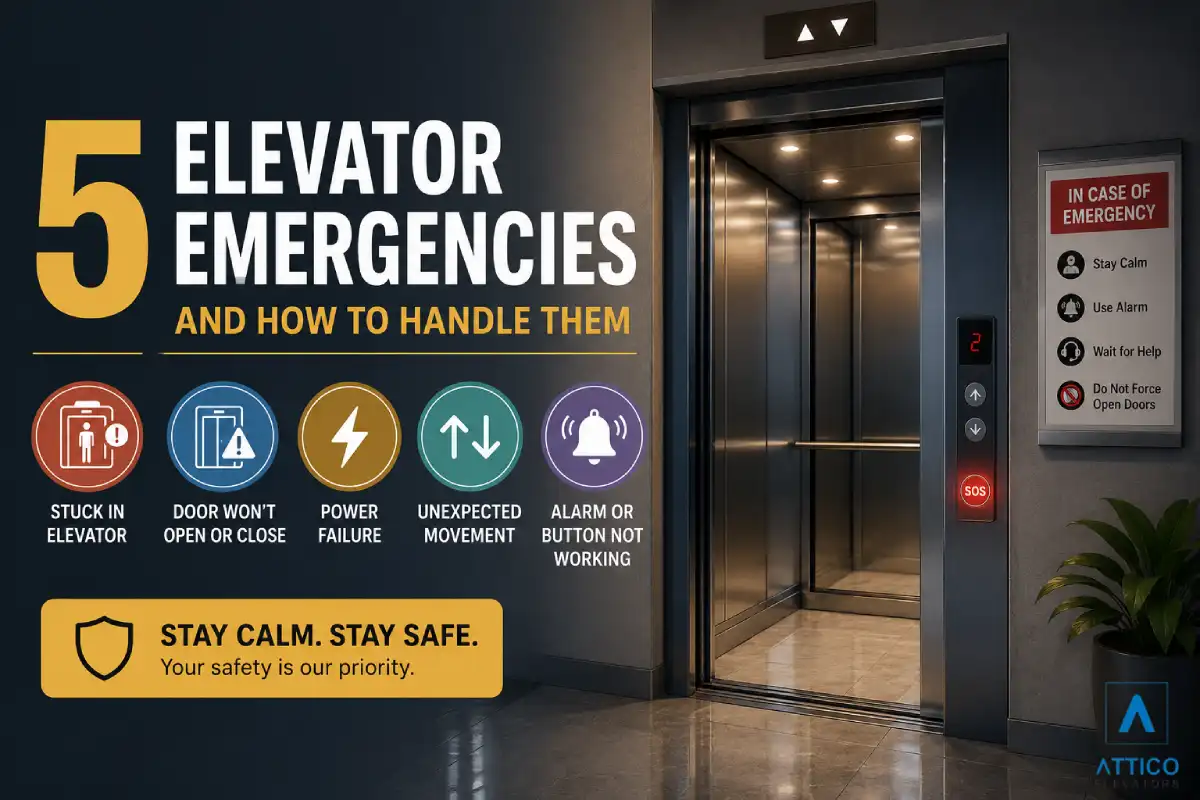
- Power backup-Look for an Automatic Rescue Device (ARD) so the elevator isn’t a liability during a power cut
- Safety features- Door sensors, overload protection, and emergency stop should be non-negotiable, regardless of elevator type
- After-sales service- A well-built elevator is only as good as the maintenance support behind it
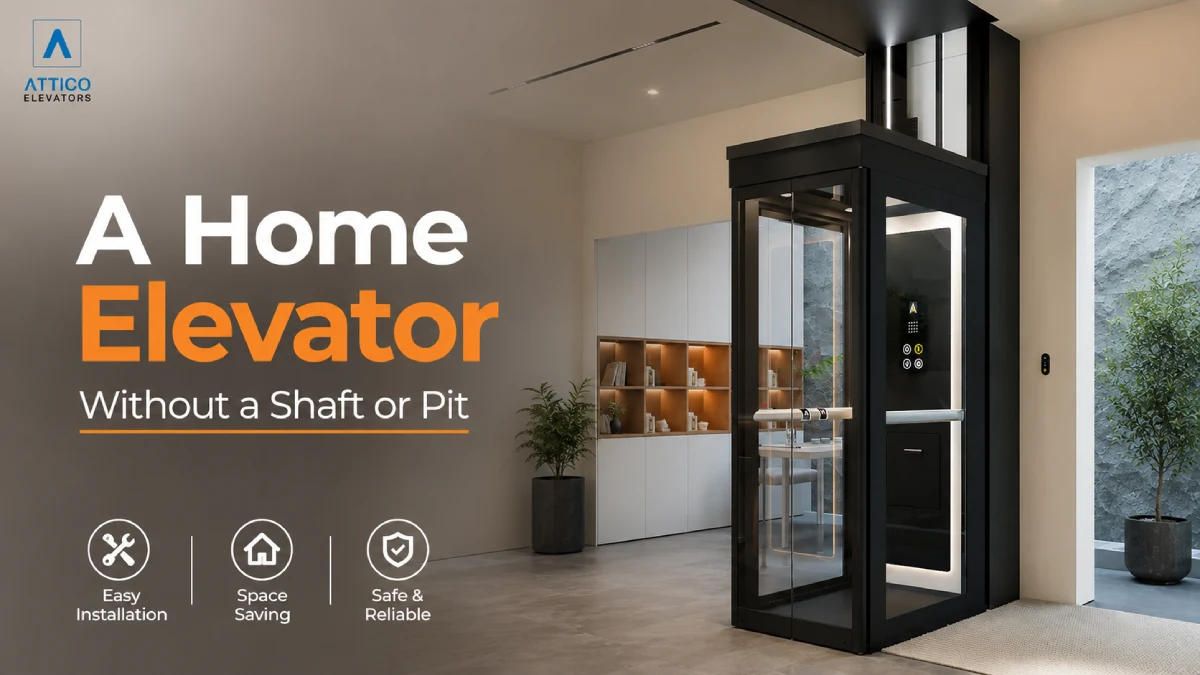
Find This: Can An elevator get installed without a shaft?
Final Thoughts
For a 3-4 storey home in Delhi NCR, an MRL elevator offers the best balance of space efficiency, energy savings, and design flexibility- making it the most future-proof choice for most homeowners. Hydraulic elevators remain a solid option where load capacity and machine room space aren’t a concern, while platform lifts suit narrower accessibility-only needs.
The right decision ultimately comes down to your home’s layout and your family’s needs. At Attico Elevators, we offer a free site assessment to help you compare MRL, hydraulic, and platform lift options for your specific home- get in touch to find the right fit.
FAQ
1. How much space does a home elevator need in a 3-4 storey house?
Space requirements vary by elevator type and capacity, but MRL elevators generally need less overall space than traditional elevators since no machine room is required. A site assessment is the most accurate way to confirm shaft, pit, and headroom dimensions for your specific plot.
2. Can an MRL elevator be installed in an existing home, or only during construction?
MRL elevators can be installed in both new builds and renovation projects. They’re often preferred for retrofits specifically because they don’t require adding a rooftop machine room, which isn’t always structurally possible in an existing structure.
3. What is the ideal elevator speed for a 3-4 storey home?
For homes of this height, a speed of 0.65-1 m/s is typically sufficient and provides a smooth, comfortable ride without the higher cost of faster systems designed for taller buildings.
4. Does a 3-4 storey home elevator need a machine room?
Not necessarily. If you choose an MRL elevator, the motor and controller sit inside the shaft itself, eliminating the need for a machine room entirely. Hydraulic systems typically require a small machine room near the base instead.
5. What happens to a home elevator during a power outage?
A good home elevator- regardless of type should include an Automatic Rescue Device (ARD), which automatically brings the cabin to the nearest floor and opens the doors during a power cut, so no one is ever stuck inside.
6. Is a platform lift enough for a 3-4 storey home, or should I get a full elevator?
A platform lift works well if your main need is accessibility for one or two floors, such as for a wheelchair user. For full daily use across 3-4 floors by the whole family, a proper passenger elevator like an MRL or hydraulic system is generally a better long-term fit.