


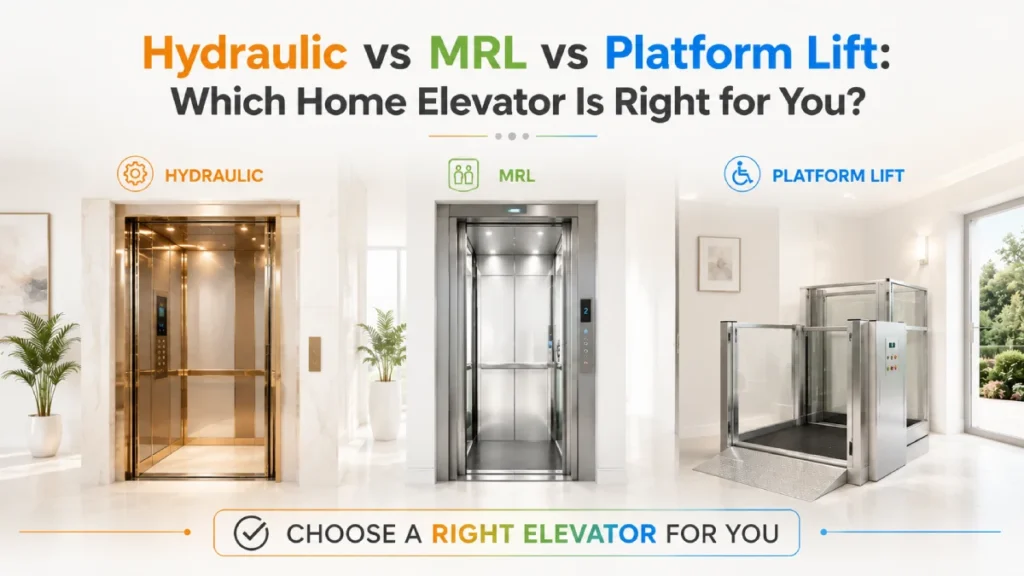
Once a homeowner decides “yes, we’re getting a home elevator,” the next question is almost always the harder one: which type? Walk into this decision without context and you’ll hear three different technical terms-hydraulic, MRL, traction, platform lift- thrown around like they’re interchangeable. They’re not, and picking the wrong one usually shows up later as either a higher-than-expected electricity bill, a lift that’s too slow for daily use, or a cabin that doesn’t fit your accessibility needs. Here is a practical, no-jargon comparison to help you land on the right one before you even request a quote and choose which home elevator is right for you.
The Short Answer
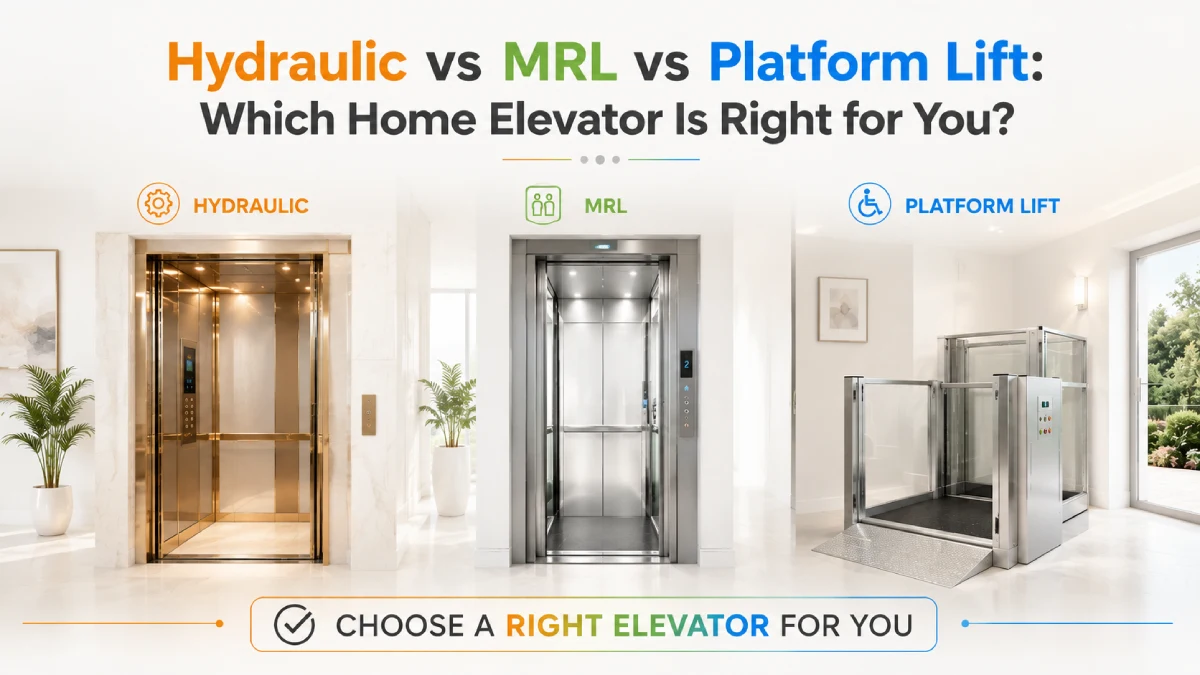
- Hydraulic → best for 2–4 floor homes, smooth and quiet, lower upfront complexity, ideal for retrofits
- MRL (Machine Room-Less) / Traction → best for 4+ floors, faster and more energy-efficient, saves shaft space
- Platform Lift (Wheelchair Lift) → best when accessibility is the primary need, most compact and budget-friendly
Now let’s walk through why.
Hydraulic Home Elevators
Hydraulic lifts for home work on a piston-driven mechanism-a fluid-powered piston raises and lowers the cabin, rather than cables and a motor pulling it from above.
Where it fits: homes with 2 to 4 floors, and especially retrofits where you’re adding a lift to an already-built house.
Strengths:
- No overhead machine room required
- Smooth, low-vibration ride at moderate speed
- Straightforward maintenance-fewer moving parts than traction systems
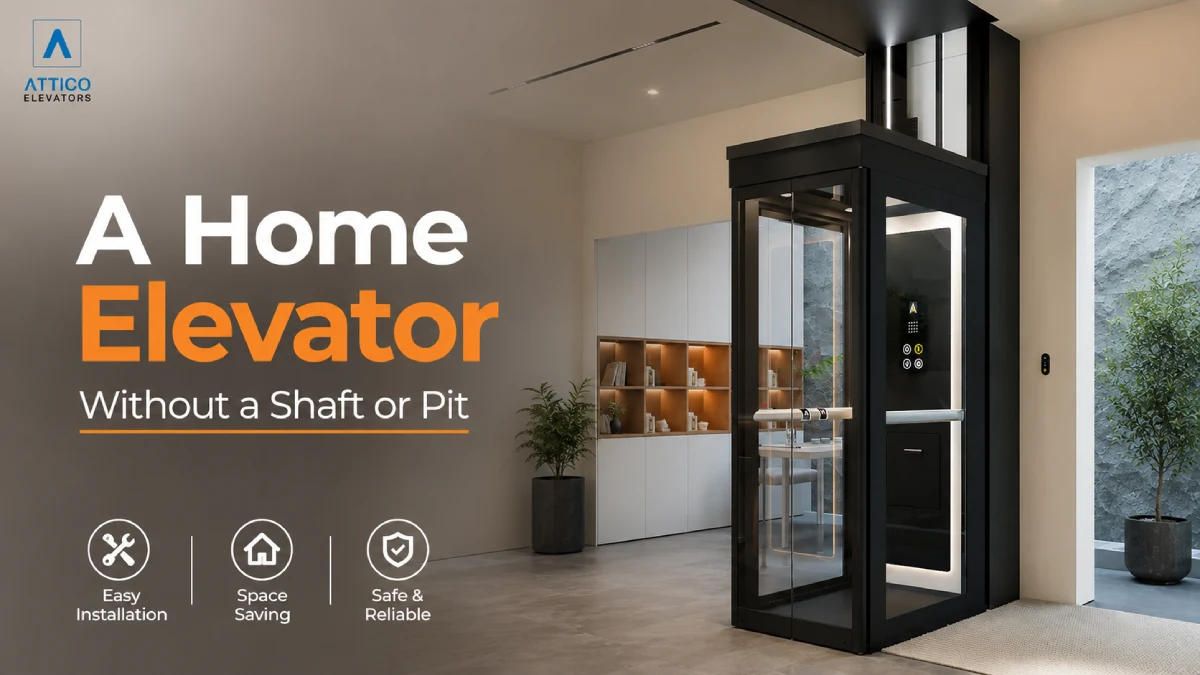
- Well suited to shaft-free/self-supporting installations (see our retrofit guide if that’s your situation)
Trade-offs:
- Slower than MRL/traction systems, which matters more as floor count increases
- Slightly higher long-term power consumption than gearless traction systems
MRL (Machine Room-Less) / Traction Home Elevators
MRL elevators use gearless traction technology-the motor sits inside the shaft itself rather than in a separate machine room, and the cabin moves via traction ropes rather than hydraulic pressure.
Where it fits: MRL Elevators are fit for homes with 4 or more floors, new construction where shaft planning is flexible, and anyone prioritising speed and energy efficiency over the lowest possible upfront simplicity.
Strengths:
- Faster ride, which matters noticeably once you’re travelling 4+ floors regularly
- More energy-efficient over time than hydraulic systems
- Saves up to 30% more shaft space compared to traditional lift designs-a real advantage in mid-rise homes and apartment buildings where every square foot counts
- No separate machine room needed
Trade-offs:
- Generally positioned at a higher price point than hydraulic for comparable cabin sizes
- Slightly more complex installation, since the shaft design needs to accommodate the traction lift system
Platform Lifts (Wheelchair Lifts)
Platform lifts are a fundamentally different category designed first for accessibility, not for replicating a full passenger elevator experience.
Where it fits: homes where the primary driver is mobility support for an elderly or differently-abled family member, rather than general household convenience.
Strengths:
- Most compact and easiest to retrofit-doesn’t require a full elevator shaft
- Lower cost than hydraulic or MRL systems
- BIS-compliant and specifically designed around safe, simple accessibility use
- Can often be installed without major structural change
Trade-offs:
- Slower speed and smaller cabin than a full home elevator
- Platform Lift for Home is Less suited to families wanting a lift for everyday multi-person, multi-floor use
A Practical Scenario: Choosing for Aging Parents in a 3-Floor House
This is one of the most common situations we see, so it’s worth walking through directly.
A family living in a 3-floor independent house in South Delhi has elderly parents who are increasingly struggling with the stairs. Budget matters, but so does making sure the solution is genuinely usable day-to-day, not just a token gesture.
- If the parents need to move between all 3 floors regularly, live independently, and the family wants long-term flexibility (including for guests, groceries, or a wheelchair later) → a hydraulic home elevator is usually the better fit. It’s smooth, quiet, and doesn’t need major structural work for a 3-floor home.
- If the concern is more specifically about safe vertical mobility for one or two people, budget is tighter, and the shaft space is very limited → a platform lift is often the more realistic and affordable choice.
- If this is a new-build home, or the family also wants faster movement across more than 4 floors (say, including a terrace level) → MRL/traction becomes worth the extra investment.
There’s rarely a single universally “best” option — it depends on your floors, your budget, your existing structure, and who’s actually going to use the lift day to day.
Side-by-Side Summary
| Factor | Hydraulic | MRL / Traction | Platform Lift |
|---|---|---|---|
| Best for | 2–4 floors | 4+ floors | Accessibility-first needs |
| Speed | Moderate | Fast | Slow |
| Energy efficiency | Good | Better | Good |
| Shaft space needed | Standard | Up to 30% less | Minimal |
| Machine room | Not required | Not required | Not required |
| Typical cost tier | Mid | Higher | Lower |
| Ideal use case | Retrofit family homes | New builds, mid-rise homes | Elderly/differently-abled residents |
For actual price ranges within each category, see our home elevator cost breakdown.
How to Decide With Confidence
Reading a comparison only gets you so far- the right choice depends on your specific floors, shaft availability, and how your household will use the lift day to day. That’s exactly what a site survey is for.
Attico Elevators, in partnership with GMV India (GMV Spa, Milan, Italy), has completed 500+ home elevator installations across Delhi, Noida, Gurugram, Faridabad, and Ghaziabad. Our team can walk your home, talk through hydraulic, MRL, and platform options against your actual layout, and recommend the right fit-not just the most expensive one.