


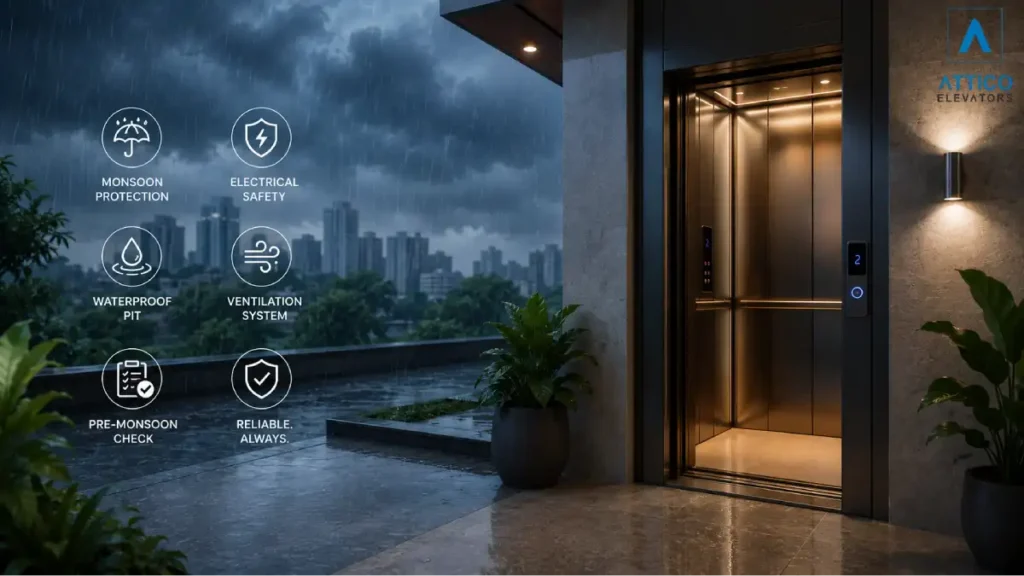
Every year, between July and September, the Delhi NCR region receives its most intense rainfall and with it comes a set of challenges that most homeowners never anticipate. While you may have planned for waterlogged streets and power outages, have you thought about what the monsoon does to your home elevator?
Residential elevators in Delhi are increasingly becoming a standard feature in premium multi-storey homes and villas. But a luxury lift for home is only as good as its maintenance. Without proper monsoon-proofing, even the most sophisticated home elevators can suffer humidity damage, electrical faults, pit flooding, and costly breakdowns- right when you need them most.
This guide is specifically designed for Delhi NCR homeowners who own or plan to install a home elevator. Read on to understand the risks, preventive techniques, tips for home elevator maintenance in monsoon and Attico’s purpose-built monsoon protection features that keep your lift running safely- rain or shine.
1. Why Monsoon is the Biggest Enemy of Home Elevators in Delhi?
Delhi’s monsoon season is not a gentle drizzle- it is a sustained, high-humidity, high-rainfall period that creates multiple simultaneous threats for elevator systems. Understanding each risk is the first step to protecting your investment.
Flooding & Water Ingress in the Pit
The elevator pit- the recessed space at the bottom of the shaft is naturally the lowest point in the structure. In Delhi homes, especially in areas like Dwarka, Rohini, and Greater Noida where water-logging is common, the pit can accumulate water rapidly during heavy rain. Even a few inches of water in the pit can damage buffers, oil reservoirs in hydraulic systems, and safety sensors.
Extreme Humidity Damage
Relative humidity in Delhi shoots up to 85–95% during the monsoon months. For home elevators, this creates a persistent threat of condensation forming inside the shaft, on electrical panels, and within the motor room. Moisture on live electrical components is a silent hazard that can cause short circuits, tripped breakers, and in worst cases, electrical fires.
Frequent Power Cuts
Delhi NCR experiences an uptick in power outages during monsoon due to overloaded grids and storm damage. An elevator mid-journey during a power cut- without a proper backup system can strand occupants between floors, which is particularly dangerous for elderly residents or those with mobility limitations.
Shaft Condensation and Ventilation Failure
Poorly ventilated elevator shafts trap warm, humid air. When this contacts the cooler metal surfaces of the cabin and rails, it creates persistent condensation accelerating rust on guide rails, degrading rope quality, and causing cabin door mechanisms to jam or stick.
2. Pit Waterproofing: Your First Line of Defence
The elevator pit must be treated as a waterproof chamber, not an ordinary concrete cavity. Here are the techniques our engineers at Attico recommend for residential elevators in Delhi:
- Crystalline Waterproofing Compound: Applied to pit walls and floor, this compound reacts with moisture to form insoluble crystals that block water paths- effective even under hydrostatic pressure.
- Drainage Channels and Sump Pump: Install a perimeter drain around the pit base connected to a sump pump with an automatic float switch. The pump activates the moment water accumulates.
- Expansion Joint Sealing: Gaps between the pit floor and walls are common entry points. Seal all joints with polyurethane-based flexible sealants designed for below-ground applications.
- Raised Equipment Platforms: All electrical components, oil reservoirs, and buffers in the pit should be mounted at least 150mm above the pit floor to allow water to pass beneath without contact.
- Waterproof Access Doors: If the pit has an external access door or panel, replace it with a watertight door with rubber compression gaskets.
Pro Tip: Request a pit waterproofing inspection every April before the monsoon hits as part of your annual maintenance contract with Attico Elevators.
3. Electrical System Protection During Monsoon
Electrical failures are the most common monsoon-related issue reported for home elevators across Delhi NCR. Protecting your electrical systems requires both preventive installation choices and active maintenance.
Moisture-Proof Control Panels
All control panels and junction boxes should carry a minimum IP54 rating (dust-tight, splash-proof). For basements and lower floors where humidity is higher, IP65 (fully sealed) panels are recommended. At Attico, our luxury lift for home installations in Delhi NCR use sealed panels with silica gel desiccant packs to absorb internal moisture.
Earth Leakage Circuit Breakers (ELCBs)
Ensure your elevator circuit is protected by a high-sensitivity ELCB (30mA trip current). This cuts power immediately if current leaks through moisture or a compromised insulation path- protecting occupants from electrocution.
Conduit and Cable Protection
All wiring in the shaft must run through GI or PVC conduits sealed at both ends. Pay particular attention to the conduit entry points into the machine room- use gland fittings that prevent water from wicking up inside the conduit.
- Apply dielectric grease to all terminal connections and plug sockets.
- Inspect insulation on travelling cables annually- cracks allow moisture penetration.
- Ensure the machine room door seals tightly- a gap at the bottom allows humid air to flood the room overnight.
4. Emergency Protocols: What to do during Heavy Rain
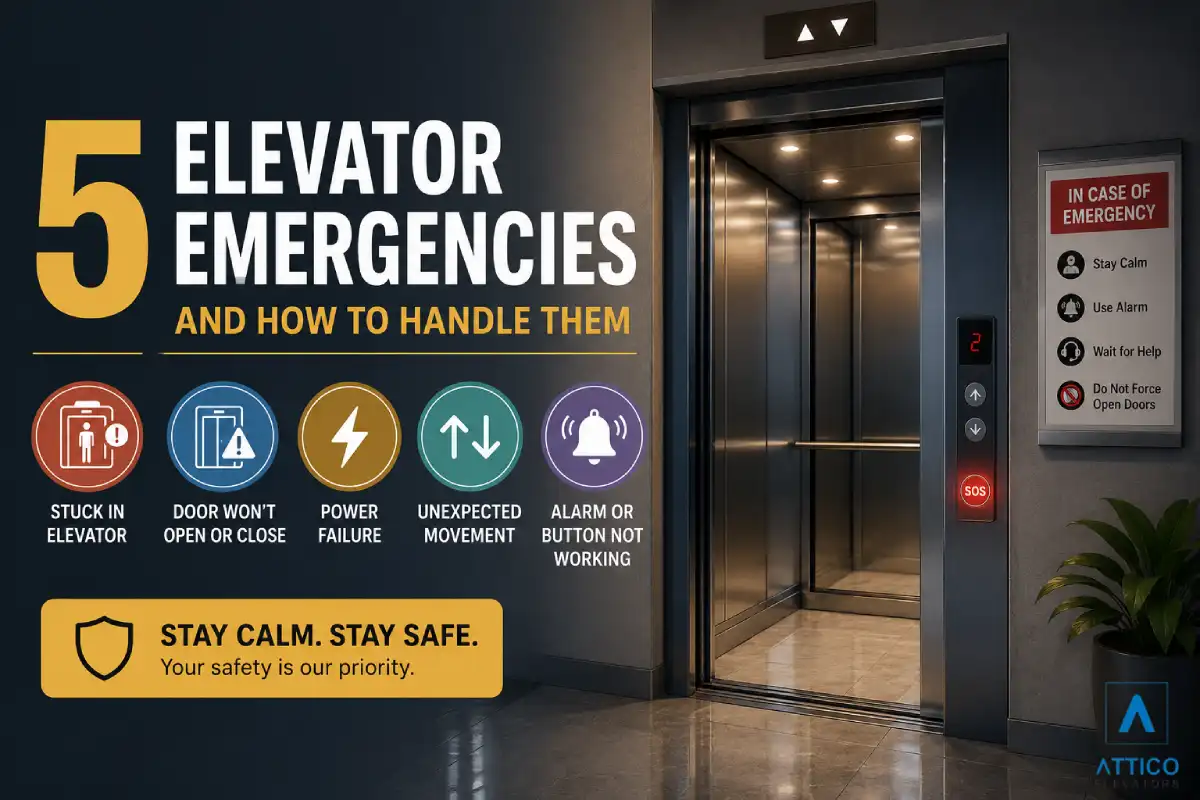
Even the best-prepared elevators can face emergencies during extreme weather. Every household with home elevators in Delhi should follow these protocols:
- Never Use the Elevator During Active Flooding: If water is visibly entering the building from the ground level, do not call the elevator. Use the staircase and isolate the elevator power at the main distribution board.
- Know Your Manual Lowering Procedure: All elevators should come with an emergency manual lowering kit. Ensure that at least two household members are trained to bring the cabin to the nearest floor manually.
- Keep Emergency Contact Visible: Post your elevator service provider’s emergency number near the elevator landing. 24/7 service helpline is available throughout the monsoon season.
- Do Not Attempt DIY Rescue: If someone is trapped, call the service team. Do not attempt to force doors or manually override safety circuits without training.
- After a Power Cut, Wait 60 Seconds: After power is restored, wait before calling the elevator- the control system requires a brief restart and self-diagnostic cycle.
Important: Instruct domestic staff and elderly family members on the manual lowering procedure before the monsoon season begins each year.
Suggested Read: 10 Important Checklist for Home Elevator Maintenance
5. Shaft Ventilation and Drainage Best Practices
Proper shaft ventilation is non-negotiable for home elevators in humid Delhi conditions. A well-ventilated shaft reduces condensation, prevents mould growth, and keeps electrical components dry.
- Cross-Ventilation Vents: Install ventilation openings at both the top and bottom of the shaft- hot humid air rises and escapes from the top while fresh air enters from the bottom, creating natural airflow.
- Mechanical Ventilation for Enclosed Shafts: For glass or fully enclosed shafts (common in luxury lift for home installations), install a small inline exhaust fan rated for continuous duty, drawing air upward and out.
- Anti-Condensation Heater: A low-wattage tubular heater installed in the pit keeps the temperature marginally above the dew point- eliminating condensation on metal components overnight.
- Shaft Drain Pipe: A small-diameter drain pipe from the pit to the building’s drainage system ensures any water that enters the pit exits before it can cause damage.
- Monsoon-Specific Inspection: Check shaft vents every two weeks during July–September. Clear any insect nests, debris or wet leaves that block airflow.
6. Pre-Monsoon Inspection Checklist (May–June)
This checklist should be completed by a certified elevator technician every year before the monsoon onset- in May or early June:
- Inspect and seal pit walls for cracks, efflorescence or seepage stains
- Test sump pump operation and float switch activation
- Check all electrical panel enclosures for IP rating integrity and internal dryness
- Test ELCB trip function- should trip within 30ms at rated leakage current
- Inspect travelling cable insulation for nicks, abrasions or brittleness
- Lubricate guide rails with monsoon-grade lubricant (water-resistant formula)
- Verify shaft ventilation openings are clear and functional
- Check door tracks and seals- monsoon humidity causes swelling in wooden door frames
- Test battery backup / ARD (Automatic Rescue Device)- simulate power cut and verify auto-levelling
- Inspect rope or belt condition for rust (traction systems) or oil contamination (hydraulic systems)
- Test all safety devices: over-speed governor, buffer, safety gear
- Replace silica gel packs in control panels and machine rooms
7. Post-Monsoon Maintenance (October–November)
Once the monsoon recedes, the damage may not always be visible immediately. Post-monsoon maintenance for residential elevators in Delhi is as critical as pre-monsoon preparation:
- Dry out the pit thoroughly- use a dehumidifier for 48 hours if water was detected during the season
- Inspect all metal surfaces for rust spots- treat and repaint immediately
- Check motor insulation resistance with a megger- values below 1 MΩ indicate moisture ingress
- Re-lubricate all moving parts with fresh lubricant- monsoon washes out grease from exposed components
- Inspect control panel PCBs visually for oxidation, corrosion or burn marks
- Test all safety interlocks and door operators- swollen door frames may have caused misalignment
- Flush hydraulic oil system if water contamination is suspected- milky or discoloured oil is a clear sign
- Update maintenance log and schedule next pre-monsoon check for May
A post-monsoon inspection by Attico’s certified technicians takes approximately 3–4 hours and can prevent major repair bills worth lakhs in the coming year.
Find This: How to get Real ROI of home elevator?
8. Attico’s Monsoon Protection Features for Home Elevators
At Attico Elevators, we have designed our residential elevators in Delhi specifically with the subcontinent’s climate challenges in mind. Our luxury lift for home range includes several factory-fitted monsoon protection features that go beyond industry standards:
- IP65-Rated Control Panels: All panels are fully sealed against dust and water jets- not just splash-proof.
- Integrated ARD with 8-Hour Battery Backup: Our Automatic Rescue Device provides up to 8 hours of emergency operation during power cuts, far exceeding the standard 1–2 hour backup.
- Stainless Steel Shaft Components: All fasteners, brackets and pit components use marine-grade 316 stainless steel- corrosion-proof even in sustained high humidity.
- Smart Humidity Alert System: Our IoT-enabled home elevators send real-time alerts to your phone if shaft humidity exceeds safe thresholds enabling you to act before damage occurs.
- Anti-condensation pit heater: Factory-fitted in all Attico pit assemblies runs on a thermostat to maintain temperature above dew point automatically.
- Monsoon AMC Package: Our Annual Maintenance Contract includes a dedicated pre-monsoon and post-monsoon inspection visit, priority breakdown response during July–September, and a free sump pump test at each visit.
Conclusion: Protect Your Investment Before the Clouds Arrive
A home elevator is one of the most significant investments you will make in your property and in Delhi NCR, the monsoon is the single biggest threat to its longevity and safety. The good news is that with the right preparation, the right materials, and the right service partner, your lift can perform flawlessly through even the heaviest downpours. These necessary tips for home elevator maintenance in monsoon will keep your lift safe and shining.
Whether you already own residential elevators in Delhi or are planning to install a luxury lift for home, Attico Elevators- Best Elevator Company in Delhi is your specialist partner for monsoon-ready elevator solutions. From pit waterproofing to smart humidity monitoring, we build and maintain home elevators that are designed for Indian conditions-not just imported and installed.